On Monday January 22, Palo Alto City Council will be reviewing proposals to address a $50 million shortfall in funding for the city’s infrastructure projects, with the largest shortfalls being for the public safety building and the two planned public parking garages downtown and in Cal Ave. One staff recommendation is to downsize the Cal Ave parking garage.
As readers may remember, last April City Council has approved two parking garages, one downtown adding a net of 252 stalls, and one in Cal Ave adding a net of 335 stalls.
To address the shortfall, staff recommends eliminating the second underground level of the Cal Ave parking garage, reducing the number of net new spaces from 335 to 241.
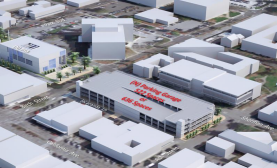
Staff’s recommendation to prune the Cal Ave parking garage is based on recent data-collection showing that the demand crunch is largely during weekday lunchtime hours; and anticipating upcoming initiatives to shift travel from single occupancy vehicle trips.
Other proposed strategies to reduce Palo Alto’s infrastructure budget shortfall include further scope reduction of planned projects, pruning projects from the infrastructure plan or the broader capital improvement plan, and raising new revenue.
Meanwhile, over the last year, Palo Alto’s Downtown Transportation Management Association, created with a goal of reducing solo driving by 30%, reported that solo driving had decreased by 4% and service worker driving had decreased by 10% after a year of initial pilot programs with subsidized transit passes. With these pilot results, Palo Alto is providing funding to expand the TMA’s programs. Part of the the downtown drivealone reduction came from the City of Palo Alto offering Caltrain Go Passes – uptake has increased from 51 in 2015 to 172 in 2016, to 200 in 2017. The TMA’s report would indicate that about 400 fewer downtown workers were using parking spaces.
Also, since Council approved the garages in April, the federal funding for Caltrain electrification, which was hung up in DC earlier in the year, was finally confirmed, construction is under way, and expected to be complete in 2022 – two years after the garages are planned to open. Electric Caltrain will have the ability to carry more passengers and provide better service to underserved stations such as Cal Ave.
Given Palo Alto’s initial success at reducing downtown car commuting, what do you think? Is the Cal Ave garage downsizing the right direction? Should Palo Alto Council do more to downsize or defer parking garages? Should Palo Alto continue with the garage program, to be able to reduce the amount of non-resident parking on neighborhood streets, and accommodate future potential growth that will inevitably bring some driving even if drive rates go down?
What do you think?


I’m a big fan of space efficient design, so I’d keep the existing larger garage and defer the decision on the smaller second garage by two years. Maybe even add one more level to the larger garage, and keep other one as a surface lot for future use.
I think Palo Alto should minimize the downtown parking program, with the aim of discouraging solo driving, and since the recent initiatives have already reduced demand by almost 430 spaces! As far as lunch time goes, a battery-electric shuttle service every 3 to 5 minutes can get people from one end of the street to the other, or from other source areas to and from the downtown restaurant scene, without driving ICE vehicles.
When will you stop spreading misinformation about “increased Caltrain capacity after electrification”?
It’s a dilemma for sure. My opinion, in general, cities do far too much to support the car centric lifestyle. So if, instead of putting significant resources into garages and such, those resources go towards supporting pedestrian, bike, and public transport, then it’s a win for all. If garage requirements are reduced (which short term minded developers love!!) without making a substantial & effective effort at getting people (happily) out of their cars, then we all lose.