At Thursday’s board meeting, the Caltrain board will consider offering a mobile payment system from Moovel.  The welcome improvement would go live within a year for iPhone and Android, and would support one way, day pass, and zone upgrade adult fare or discount tickets (but not monthly or 8-ride passes).
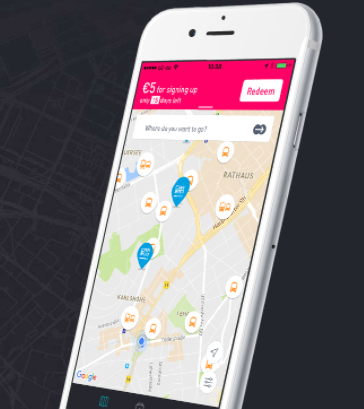
The staff report doesn’t say whether the price would be the same as Clipper or as cash. Hopefully it would have the same discount price as Clipper, to continue to encourage people who have the option to not use the ticket vending machines, which are slow and attract lines at busy periods.  Update: Per Caltrain, the mobile tickets would have the same price as paper tickets, rather than the discounted Clipper fare.
The system would take credit, debit, and commuter benefit cards, but not Apple Pay or Google Wallet. Â Optional features that might be added within two years include parking payments, promotion codes, real-time incident response communication, and trip planning.
Moovel is owned by automaker Daimler, and is a transit software division formed by a merger between GlobeSherpa and RideScout.  The base price is ~$494,000 for two years of service, with the potential to add optional features for ~$150,000 and another two years of service for an additional ~$40,000.
This is the mobile payment system used by Muni and Portland’s Trimet – have you used either of these, and what did you think?  (The Google Play reviews have three stars, and include some reports of issues with reliability and performance. )
The trip planning presumably would come from Moovel’s software formerly known as RideScout. Hopefully the trip planning has improved since it was available as a standalone product; your blogger tried it earlier and found it unreliable. If it’s still unreliable, there are some other excellent choices for trip planning tools.


Hm… is this what will happen?
1. Install the app
2. Wait until the conductor checks for ticket
3. Quickly scramble to buy a ticket
Given how infrequently conductors check tickets, and the speed at which they do it… sounds like there’s a huge incentive to buy on demand.
Last month my Clipper card was checked only 3 times… 2 times visually… yeah the conductor looked at the card with his/her eyes.
Why would it not use Android Pay from the onset? Supporting it means that I start making purchases as soon as I download my app rather than entering credit card details into yet another site where it can be hacked.
How many additional riders to they expect to gain from using Moovel and what is the cost per new rider? What about Clipper 2.0 and coordinating with the other transit agencies for a mobile payment solution, so i don’t need 7 different apps to get around the bay?
My thought is that Caltrain already has enough problems with overcrowding, failing equipment, crappy hourly service much of the day and weekend, electrification, CBOSS, (lack of) WiFi, and a broken zone fare system. How about investing that spare 1/2 million in solving some existing issues?
good question.
they could add a feature that used GPS to detect when people got on the train!
Clipper 2.0 is scheduled for 2019,hopefully by then there will be a regional solution.
Could lead to more regional fragmentation in the form of mobile payment apps. An app for Muni, an app for BART, an app for Caltrain, an app for Caltrain…
mobile ticketing is supposed to be a feature of the next-generation Clipper system scheduled for 2019, so hopefully local solutions will be replaced by a regional system in several years
Adina, we’re still dancing around the question here. Why is Caltrain considering spending at least $500K on a new mobile payment system, when there are already plans to implement mobile payment via Clipper 2.0 in “2019”? What is the benefit? Why not use this money to do things that might actually increase ridership, like running another mid-day train or two?
This is a feature request that has come out of customer surveys over time. Other customer surveys have shown that many Caltrain users got their first experiences using Caltrain for entertainment, so having a good user experience for people who aren’t regular commuters seems good to attract customers. Additional service would be fantastic and the best use of money but given electrification construction seems exceedingly unlikely to happen til construction is done.
@Marc R
When I travelled to NY last year, I used the app for NJ Transit. It was quicker to buy a ticket while walking to the station, rather than budgeting enough time to figure out trains, zones and fares at a machine not knowing if there’ll be a line and how long it will take. There’s great benefits there and visitors to bay area expect transit systems to keep up.
Unless they switch Clipper 2.0 to behave like an accumulator card, there will always be a need for a separate solution for visitors (ticket machines + app)