Caltrain’s San Francisco funding partners clarified, in response to the discussion about the Caltrain maintenance budget, that San Francisco County Transportation Authority does have some funding available to put toward maintenance and repair.

At Caltrain’s board meeting last Thursday, the board reviewed budget options including a skeleton budget that would underfund items such as maintaining trains so they don’t break down and replacing century-old bridges that are become safety hazards (see the line items for bridges and rolling stock).
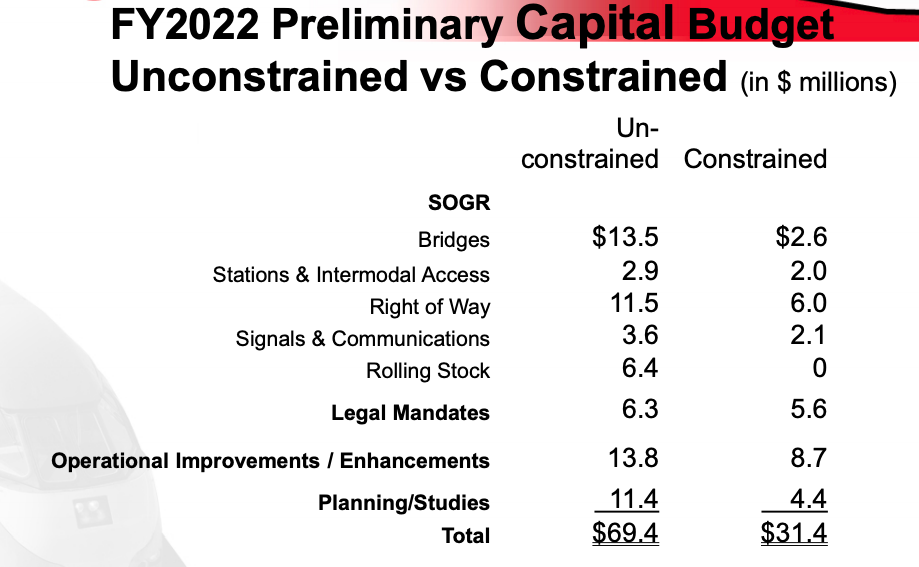
Part of the confusion comes from the way that Caltrain prepares its budget, and part from continuing ambiguity and board disagreement about Measure RR.
Caltrain prepares budgets annually for service, maintenance (called “State of Good Repair”) and major capital projects (like electrification). The budgets are developed with the three county partners in San Francisco, San Mateo, and Santa Clara Counties.
The funding partnership works with a gentleman’s agreement that “the lowest bidder sets the bar”. VTA had already proposed in their proposed biannual budget that they weren’t intending to pay, so apparently that set expectations with Caltrain that no partners would pay.
When the SamTrans board offered to contribute $5Million toward Caltrain’s maintenance needs, San Francisco spoke up and clarified their intent to contribute. But the amount they would contribute is not yet defined.
While the VTA board has discussed their intent to no longer pay anything for Caltrain’s annual budget, operating or maintenance, they do have over $140 million available from federal relief funds, not counting the latest federal funding which has not been allocated.

Unfortunately, the about how to pay for Caltrain’s maintenance has not been cleared up with Measure RR. In the discussions at 7 boards to prepare to put Measure RR on the ballot, there was no explicit agreement that was made about how the new ⅛ sales tax would affect partner contributions. We heard that this was left ambiguous because attempting to clarify the budget process and obligations might have risked the rocky process of getting Measure RR on the ballot.
Also, whatever incomplete discussions had occurred before Measure RR passed, the situation in recovery from Covid is different at the moment. The partners should figure out some way to pay for maintenance in this recovery year.
Relationship to Caltrain governance
Meanwhile, Caltrain is talking about its own governance. A Joint Powers Authority where the partners in the agency cannot agree on how basic maintenance should be funded is clearly not working sufficiently well as a governance structure. Annual negotiations, leaving riders in suspense about whether trains will break down due to lack of maintenance, is not functional governance.
Part of any agreement that is made on Caltrain governance should be a functional process to be able to work together prioritizing core funding needs.
The Caltrain board’s next governance workshop meeting is scheduled tomorrow, May 14 at 1pm. The agenda with instructions to watch online and comment is here.


