At last week Thursday’s board meeting, VTA released a draft overhaul of its bus and light rail service, and discussed potential changes to fares.  The agency hasn’t yet decided how a half-billion dollars in Measure B funding could improve the proposed changes. There will be a lot of opportunities to give input in the next 6 weeks, and input will make a difference.
The Next Network revamps VTA service to focus on a network of frequent routes arriving every 15 minutes or less (red on the map). Here is an interactive version of the new map, with details of the proposed changes are here: http://nextnetwork.vta.org/ Â

The goal is to put many more homes and jobs in proximity to frequent transit, therefore increasing ridership, at the cost of cutting other routes that carry many fewer passengers.
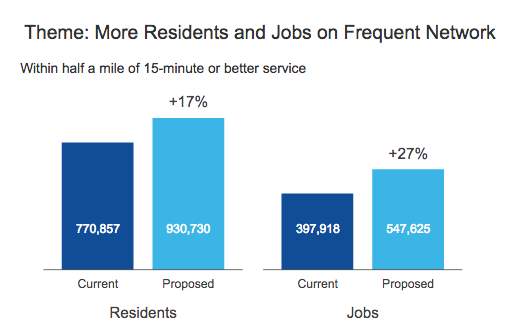
For transit trips that you take (or might take if transit was more practical), are these changes helpful? Anti-helpful? Are there improvements that would make it better? Â The last time VTA overhauled its schedule, staff made over 50 changes based on community feedback, so please do speak up.
In January and February, there will be numerous meetings around the county (in places including San Jose, Milpitas, Cupertino, Palo Alto, Mountain View, and more) to give feedback on the changes, and you can share feedback online at the site above. Â Staff will incorporate changes, VTA committees will review an updated version in March, and the board is scheduled to decide in April, for changes to go live in the fall, timed for the launch of BART service.
A calendar with meetings is here, and see below for the meetings so far on the Caltrain corridor. Â
Fare overhaul in the works
Meanwhile, VTA is studying fare changes.  The “Next Network†design anticipates riders taking more transfers to get to where they’re going, especially since transfering is less onerous with more frequent service. VTA is studying eliminating or reducing the transfer penalty so riders don’t pay twice for a trip.  The system redesign has goal to improve farebox recovery – the VTA is the worst in the nation – so they are looking at increasing fares overall.
While increasing the base fare for most riders, VTA is looking into opportunities to preserve a program providing a deeply discounted fare for elderly and very-low-income people, started with grant funding. The grant is expiring and they are looking for opportunities to continue that service.
One area ripe for fare increase is the EcoPass bulk purchase plan, which gives the sweetest deals to Silicon Valley’s largest employers; VTA may increase and change pricing structure for corporate employers, while maintaining larger discounts for students and nonprofits. Â
However, VTA is not yet looking to reduce transfer penalties with BART and Caltrain. Currently, a Caltrain pass gets you rides on buses, but a VTA pass gives you no extra access to Caltrain.   As more VTA service connects to BART and Caltrain, it would be helpful to improve fare integration and reduce transfer penalties for these trips as well.Â
At VTA’s board meeting, Mayor Liccardo pointedly asked staff whether they would consider fare coordination with BART and Caltrain as well, and staff answered that it would be in a “future phase.” Now that they have board direction, hopefully this will be in the works.
There may be even more opportunities in the coming years with MTC’s means-based study, with Clipper 2.0, and with regional funding measures to take more substantive steps for equitable and integrated fares in the Bay Area.
How to use Measure B funds to improve the plan
VTA has not yet discussed how the $500Million in Measure B funding targeted at transit operations might be used to improve the results of the next network. Â Â Logical opportunities for improvement include
1) Using Measure B funding to restore or provide alternatives for routes where cuts would have greatest impacts on very low-income, elderly, and disabled transit-dependent riders
2) Using Measure B funding to add frequent service to more routes that would gain ridership if service was more frequent – turning key “blue†lines in the map to “redâ€
3) Using Measure B funding targeted for Caltrain South County service sooner rather than later, to add frequency to this underserved route.
Please do take the opportunity to share your thoughts with VTA on the changes.
The meetings on the Caltrain corridor are:
- Downtown San Jose – January 11, 6-8pm, Chamber of Commerce, 101 Santa Clara
- Downtown San Jose – January 17, 12:30pm, SPUR, 76 South 1st Street
- Palo Alto – January 19, 6-8pm – Palo Alto City Hall, 250 Hamilton
- Mountain View – February 6, 6-8pm, Adobe House, 157 Moffett
- Gilroy – Feb 15, 6-8pm, Gilroy Library, 350 W. 6th
- South San Jose – Feb 16, 6-8pm, 5585 Cottle Rd (.5 miles from Blossom Hill Caltrain)


