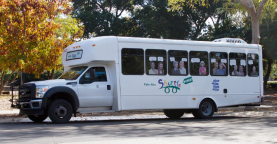
Last night, Palo Alto City Council held off from putting a local transportation tax on the ballot in November 2016, and resolved to pursue a tax in 2017. Â The tax could fund local transportation priorities, including the Transportation Management Association with an initial goal to reduce driving downtown, a major expansion of the Palo Alto Free Shuttle, and local match funding for Caltrain grade separations (see the staff report for more ideas on what might be funded).
The tax being discussed would assess an annual tax of $100 per employee for businesses with over 40 employees, and $50 per employee for businesses with 11-50 employees.
The business community threatened opposition to a tax if it was put on the ballot in 2016. Polling results, while positive (65% yes, probably, or undecided leaning yes), was also soft. Â Nearly half of voters were undecided, which would have made the measure vulnerable to an opposition campaign.
Also, polling showed that a local tax could take some support away from the VTA sales tax on the ballot in 2016, which is slated to pay for Caltrain capacity improvements and grade separations, in addition to investments in BART, bus service, active transportation, and roads.  The VTA measure needs a 2/3 majority to pass, and such measures often are decided by very slim margins.
Carl Guardino of the Silicon Valley Leadership Group, which has run the campaigns for Santa Clara County transportation taxes in recent decades, came in person to urge Palo Alto not to take steps to risk the countywide tax.
The local transportation tax has been under discussion by a City Council local transportation funding committee since March. Â There were still many open questions about the details of the tax and the expenditure plan, and city staff said it would be a challenge to work out those details by an August deadline while City Council was on recess.
Proponents of pursuing 2017 or 2018 wanted to see more community outreach to business and residents, and a refined expenditure plan. The City Council will commission a group of stakeholders, including residents and businesses, to work on the plan.
Another consideration, not discussed at the meeting, is that there are ongoing discussions about how to provide stable operating funding for Caltrain. Â Business taxes are among many options being considered, with logical questions about the relationship between local business taxes and Caltrain operating funding.
Given the high level of interest in addressing traffic and parking problems, and improving environmental sustainability, it would be valuable to have funding for local programs, in addition to the regional needs being addressed by the VTA transportation tax.


